ESRF Members
contacts
Angelika Rosa
Scientist
+33 (0)4 38 88 19 75
Ben Cordonnier
Scientist
+33 (0)4 76 88 28 56
FOLLOW US
|
|
|


  |
Benoit Cordonnier (Visiting Scientist at ID19) Volcanologist, I relentlessly explored Earth gears and clockwork. I specialized myself in experimental geology, mimicking natural processes and observing what is normally hidden by millions of years or kilometers of depth. Academic and proud tech-nerd, I always look for new approaches to make progress our understanding in rock mechanics. It naturally pushed me to settle at the European synchrotron (ESRF), this unparalleled laboratory. |
|
|
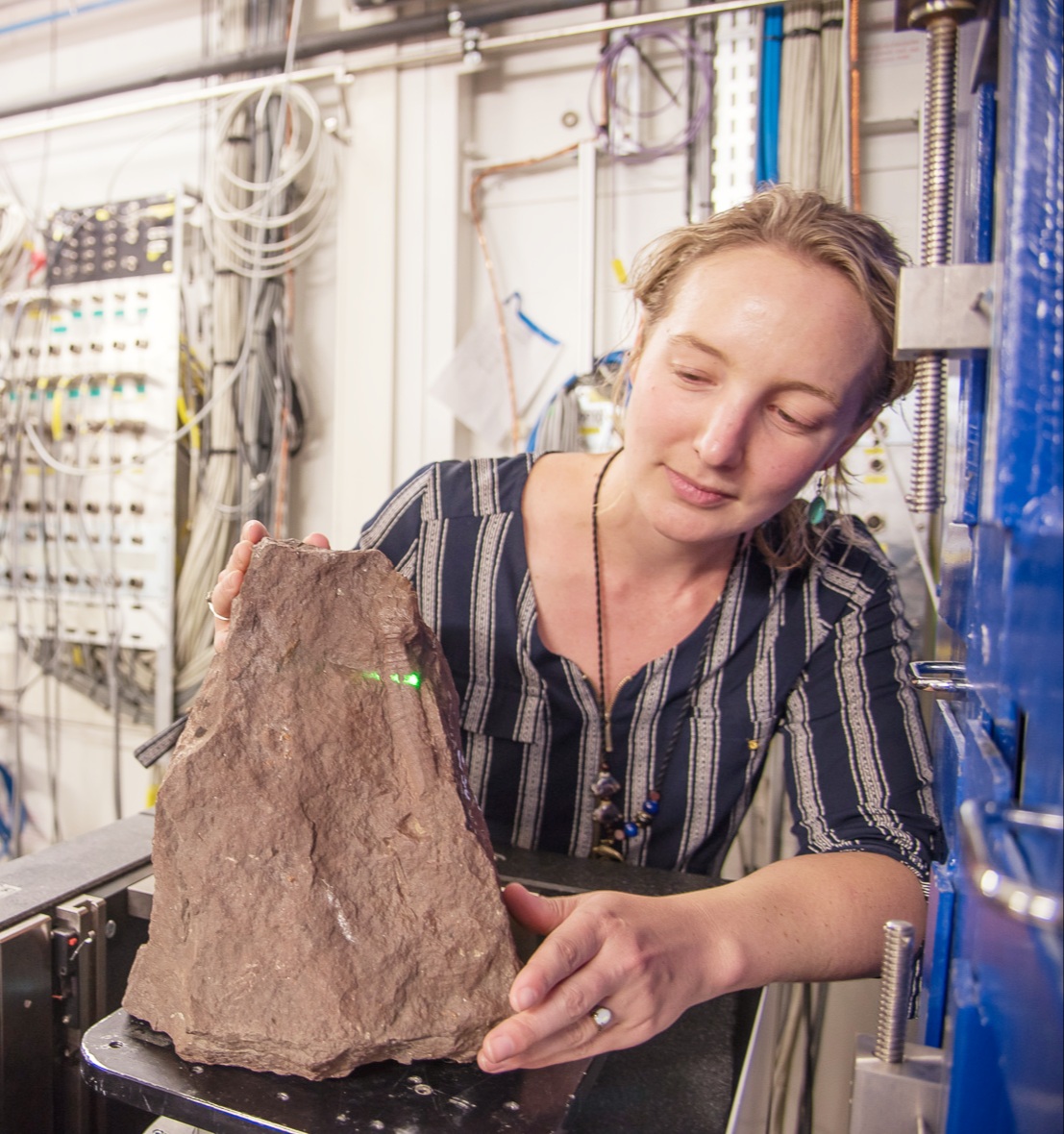
Kathleen Dollman (Post-Doc at BM18) I always have been fascinated by all things ancient, and I became hooked on ancient, fossilized animals when I visited the Evolutionary Studies Institute, Johannesburg. My research focus is on the ancestors of crocodiles, the very earliest members of this once large and very diverse group of animals.The synchrotron light source allows us to see inside fossils with unprecedented detail, and I am excited to investigate the ecology and biology of many different groups of animals with this amazing technological resource. I did my undergraduate studies at the University of the Free State (South Africa), and my postgraduate studies at the Evolutionary Studies Institute, University of Witwatersrand (South Africa). |
 |
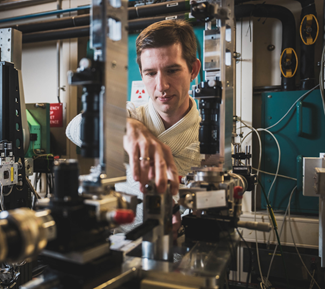
Catherine Dore-Ossypian (Post-Doctoral Scientist at BM18) I have an engineering background, but my passion for research and experimental work brought me to rock mechanics. During my PhD, I was privileged to use in situ synchrotron imaging combined with mechanical testing on porous carbonate rocks. This experience with top-notch instruments ignited my desire to continue in this field. Now at ESRF, I am thrilled to continue this journey in a unique scientific playground with increasingly complex experiments. I aim to develop efficient image analysis tools addressing key geoscience and societal challenges through the CHRONOS BAG project, as well as optimize experimental investigations to advance climate change solutions. |
 |
Yaozhu Li (Postdoctoral Researcher at ID03) I am a geologist and mineralogist specializing in using minerals as strain recorders to unravel the deformation history of rock samples and their parent bodies. My research focuses on shock deformation in terrestrial bodies across the solar system, with emphasis on olivine crystal distortion and phase transformation, alongside other key mineral building blocks. I explore how crystals form from melts or condense in the solar nebula, and how they adapt to plastic deformation through dislocation diffusion or gliding under both low-strain and high-strain conditions. In parallel, I am also involved in economic geology, investigating the role of magmatic and hydrothermal fluids in ore deposit formation. My experience as an exploration geologist and geophysicist includes green- and brown-field exploration, where I use full tensor magnetic gradiometry coupled with other traditional means. I aim to innovate and implement environmentally conscious methods in mining exploration by leveraging existing datasets and planning future geological and geophysical surveys. |
|
|
Angelika Dorothea Rosa (Scientist at ID24-DCM/BM23/ID15b) I am an experimental mineralogist and geochemist, my primary objective is a better comprehension of global element cycles and geodynamical processes taking place in the deep Earth’s interior. I am particularly interested in understanding the underlying microscopic mechanisms that are at the origin of global scale phenomena. I have a long-standing experience in experimental mineralogy that enabled me extracting fundamental physico-chemical properties of geomaterials at the relevant extreme P/T conditions of the Earth’s interior (>130 GPa, > 4000 K) using state-of-the-art in-situ methods and synchrotron X-ray radiation. |
|
|
Harald Müller (Chemistry Lab Manager) Chemistry & Micro-Imaging Chemist, with a strong preparative background and a long experience in the field. The Local Mineralogy Project: Initially a purely private initiative, collecting minerals in the Isère department has gradually evolved over the last ten years from a pastime activity into a more systematic search and identification of (local) and (occasionally hitherto unknown) mineral specimen. The expertise and active involvement of ESRF staff scientists (W. Crichton, M. Hanfland) and visitors (M. Merlini) as well as the characterization resources offered by the ESRF have been invaluable. Since the early beginnings in 2005, this activity has been extended and includes also field trips and collecting opportunities outside of the initial area. |
|
|
Jean-Alexis Hernandez (Junior Scientist at ID24-HPLF) At the intersection between mineralogy, shock and plasma physics, I am studying minerals and liquid phases presenting an interest for the understanding of the deep early Earth, super-Earths and water-rich exoplanets. In order to reproduce the extreme conditions typical of these planetary interiors (up to several hundred GPa and thousands of Kelvin), I combine high-pressure experiments and atomistic simulations. In particular, I use and develop laser-driven dynamic compressions (on- and off-Hugoniot) coupled or not with ultrafast X-ray diffraction, and soon X-ray absorption spectroscopy on ID24-ED with the High Power Laser Facility. |
|
|
Ilya Kupenko (Scientist at ID14) I am a mineral physicist studying the chemical and physical properties of geophysically important materials at extreme conditions. I am currently mostly focused on the investigation of magnetic materials in the mantle and on constraining the composition of the Earth’s core. Our mantle might be not as magnetically ‘dead’ as it is usually assumed, so I am studying the magnetic minerals at mantle conditions by Synchrotron Mössbauer Source spectroscopy at ID14. For the core, I am investigating the elasticity and plastic deformation mechanisms of candidate binary and ternary iron alloys and compounds in situ at high pressures and temperatures using a combination of state-of-art synchrotron techniques: Nuclear Inelastic Scattering at ID14, Inelastic X-ray scattering experiments at ID28, and X-Ray Diffraction at ID15b and ID27 beamlines. |


partners


European Synchrotron Radiation Facility - 71, avenue des Martyrs, CS 40220, 38043 Grenoble Cedex 9, France.