- Home
- The ESRF Safety Group
- Preparing for your Experiment
- Biological Experiments
- Samples from Humans and/or Derivatives
Samples from Humans and/or Derivatives
Samples from Humans and/or derivatives
Importation / Exportation of Human Samples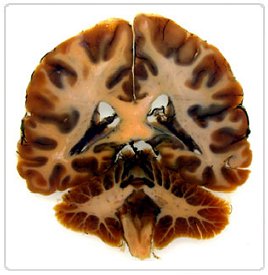
Authorisation must be sought from the French Research Ministry to import and export human organs, cell tissues and their derivatives which are to be used for scientific purposes. The form is in French because it should be presented to French customs on request, but the sections which must be filled in by the Scientists have been translated into English (in blue). This regulation is related to Bioethics.
N.B. This dossier must be submitted, by the ESRF, to the Research Ministry at least 3 months before the experiment is due to take place at the ESRF.
This dossier must include :
- a brief summary of your research project
- a label which must be placed on all packages carrying human samples or their derivatives. The template can be found here. The User must complete parts (a), (b), (c) and sign it before including it in their dossier.
- an accompanying letter from the head of the research department stating the importance of the research project
- a testimony about innocuousness of the samples related to HBV, HCV and HIV viruses
- a letter stating that samples have been collected with prior consent of patients and no money has been exchanged in whatsoever form to collect the samples
- details are required about the conditioning of the samples for transportation and for handling, once on our beamlines.
Once completed, email your dossier with all documents to the Biosafety Officer.
Specific case for Human Cell Lines
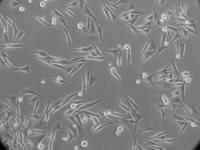
How to use Human cells at the ESRF
Human cells are subject to regulations concerning their import, storage and use (French Public Health Code - Art. L1211-1)
To study human cells at the ESRF, the following documents are required:
- Conservation declaration number from the laboratory owning the cells (if French samples)
- Authorisation to import and export cells derived from the human body (if foreign samples)
Depending on the type of sample, a certain level of laboratory containment is mandatory. The ESRF has a biosafety level 2 laboratory, where level 2 samples can be handled.
Outside of this laboratory, no handling of level 2 samples (non-fixed) can take place, notably on the beamlines or the cryo-microscopes.
Reminder: all level 3 and 4 samples are strictly forbidden at the ESRF.
The following table summarises the different scenarios for assessing the level of biological safety of human cell samples, and the documents required for their use at the ESRF.
|
Human cells |
|||||
|
Cell type |
Commercial lines |
Primary cells |
|||
|
GMO |
NO |
YES |
N/A |
||
|
Comments |
Contains no biological pathogens |
Contains a biological pathogen |
Assessed and downgraded C1 by CEUCO* |
Not assessed by CEUCO* |
Commercial only |
|
Risk level |
1 |
2 or + |
1 |
2 or + |
2 or + |
|
Uses |
Possible (after evaluation of line characteristics) in level 1 laboratory. |
Only in confined laboratories (L2 minimum), unless fixed. |
Possible in level 1 laboratory. |
Only in confined laboratories (L2 minimum), unless fixed. |
Only in confined laboratories (L2 minimum), unless fixed. |
|
Examples |
HEK, HeLa…** |
Daudi, Hep3B… |
|||
|
Mandatory documents |
Conservation declaration or import/export authorisation number, |
Conservation declaration number or import/export authorisation, |
Conservation declaration or import/export authorisation number, |
Conservation declaration number or import/export authorisation, |
Conservation declaration number or import/export authorisation, |
* CEUCO: Expert committee on the contained use of GMOs
** CEUCO list of declassified cells: https://www.enseignementsup-recherche.gouv.fr/fr/ogm-autorisation-declaration-agrement-et-auto-evaluation-86407
All level 2 and + samples must be chemically or physically fixed for analysis on the beamlines or cryo-microscopes. Cell fixation protocols (chemical or physical) must have demonstrated reproducibly the absence of pathogenicity after fixation.
GMOs from abroad will be assessed by the Safety Group - Experimental Safety Unit using the Ministry's recommendations (GMO vade-mecum, April 2022). GMOs assessed as C1 will be declared and authorised, while GMOs classified as C2 or + will be subject to authorisation by the Ministry and assessed by CEUCO.
Do not hesitate to contact the Biosafety officer rapidly for more details and to get help if needed.
French Regulation
Several regulation texts have been published in France for human samples and derivatives. These texts, in French, are all entered in a database from the link as follow:
http://www.legifrance.gouv.fr/
or can be viewed from the list below:
- Décret no 2000-156 du 23 février 2000 relatif à l'importation et à l'exportation d'organes, de tissus et de leurs dérivés, de cellules du corps humain, à l'exception des gamètes, et de produits de thérapies génique et cellulaire, et modifiant le code de la santé publique (deuxième partie : Décrets en Conseil d'Etat)
- Décret n° 2007-1220 du 10 août 2007 relatif au prélèvement, à la conservation et à la préparation à des fins scientifiques d'éléments du corps humain et modifiant le code de la santé publique (dispositions réglementaires)
- Arrêté du 16 août 2007 fixant le modèle de dossier accompagnant les déclarations et les demandes d'autorisation de conservation et de préparation à des fins scientifiques d'éléments du corps humain
- Arrêté du 16 août 2007 fixant le modèle de dossier incluant le protocole relatif aux prélèvements à des fins scientifiques d'organes, de tissus ou de cellules issus du corps humain
- Décret n° 2008-891 du 2 septembre 2008 relatif à l'importation et à l'exportation des produits du corps humain
partners


European Synchrotron Radiation Facility - 71, avenue des Martyrs, CS 40220, 38043 Grenoble Cedex 9, France.