- Home
- Users & Science
- Find a beamline
- ID14 - Nuclear Resonance Beamline
- Beamlines layout and performance
- Detectors and electronics
Detectors and electronics
Avalanche Photo Diodes
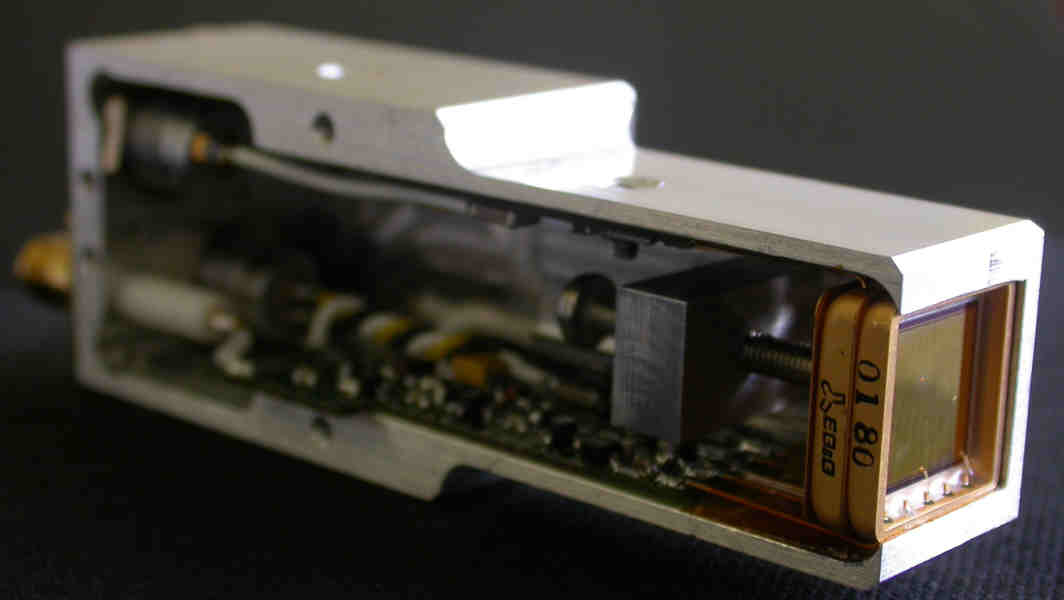
For nuclear resonance scattering experiments detectors with ns to sub-ns time resolution, high dynamical range, and fast recovery time are mandatory. Beam intensities of 109 photons/s in the prompt pulse (i.e., 200 photons per bunch in 16-bunch mode) are common conditions. The detector must survive this intense prompt flash and be able to count few nanoseconds later a single photon event of the delayed nuclear radiation. State-of-the-art detectors are nowadays Avalanche Photo Diode (APD) detectors.
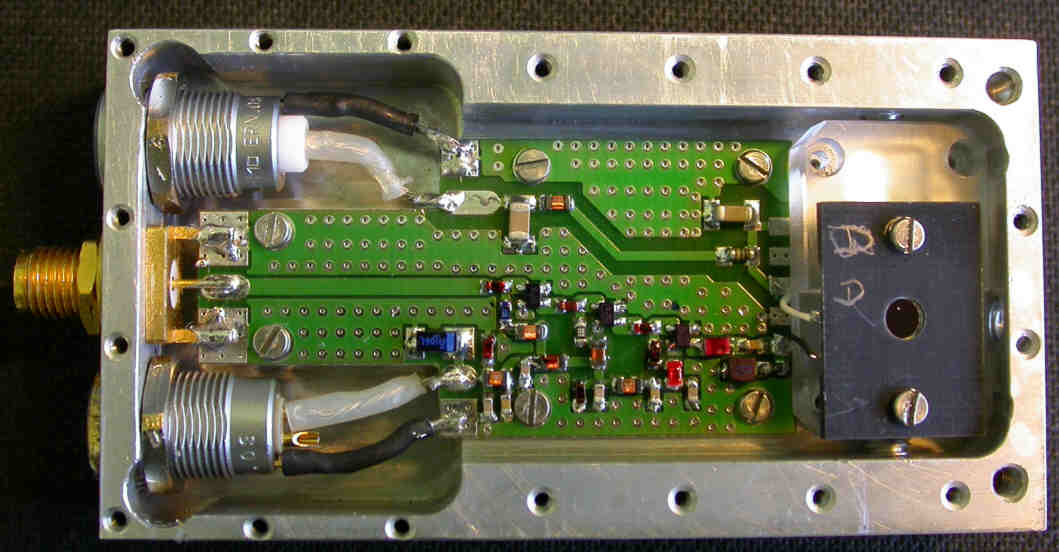
We pushed the development of these detectors including electronics (APD circuit) in the group.
The performance can be summarized as:
-
dynamic range and linearity is assured over nine decades of intensity
-
efficiency: 40% at 14.4 keV
-
background: 0.02 photon/s
-
time resolution: 100 ps to about 1 ns
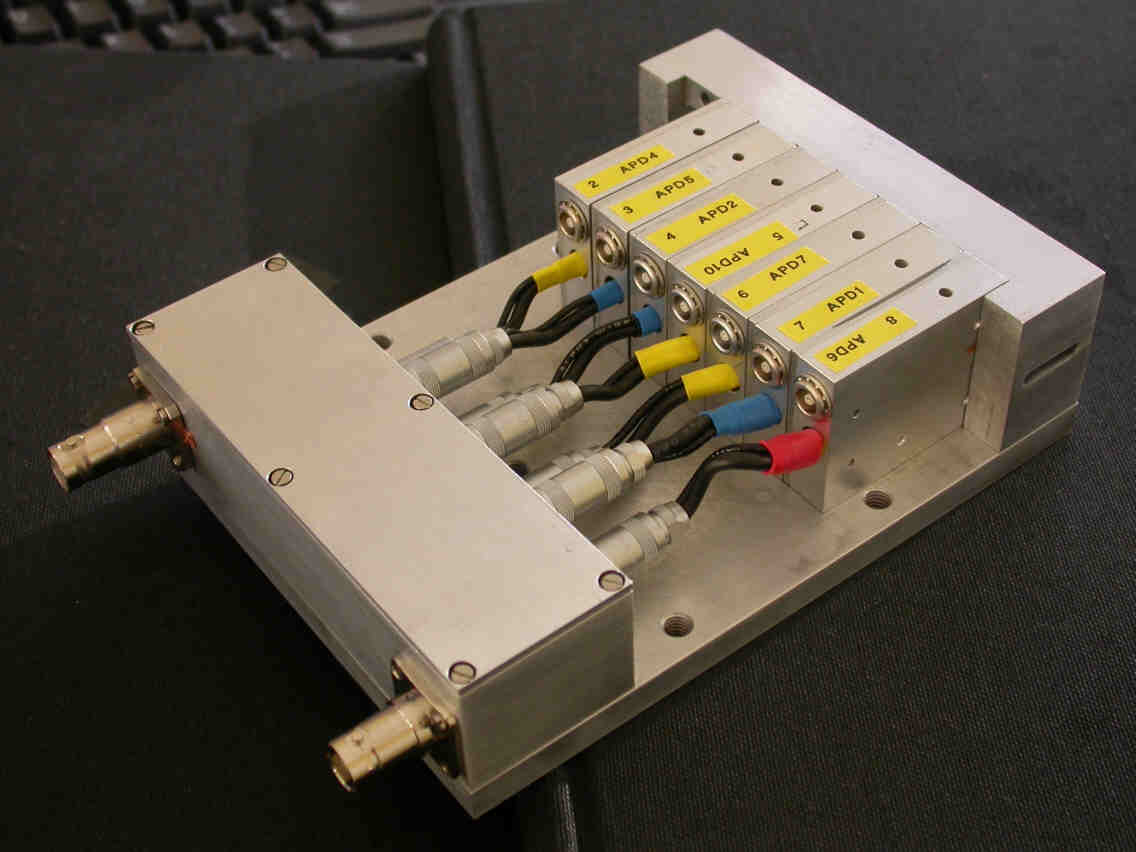
Depending of applications and energy regime stacked (APD array up to 24) and inclined detectors are common practice in order to improve the efficiency. These detectors are now also used at other beamlines and were the basis for the development of fast counting detectors by the detector group. However, with the improvement of the synchrotron radiation sources and more demanding experimental set-ups the detector system has to follow. As a first step in this direction we inquire on the one hand the possibilities for faster detectors (< 1 ns) and on the other hand for one dimensional fast detector systems.
Fast Electronics
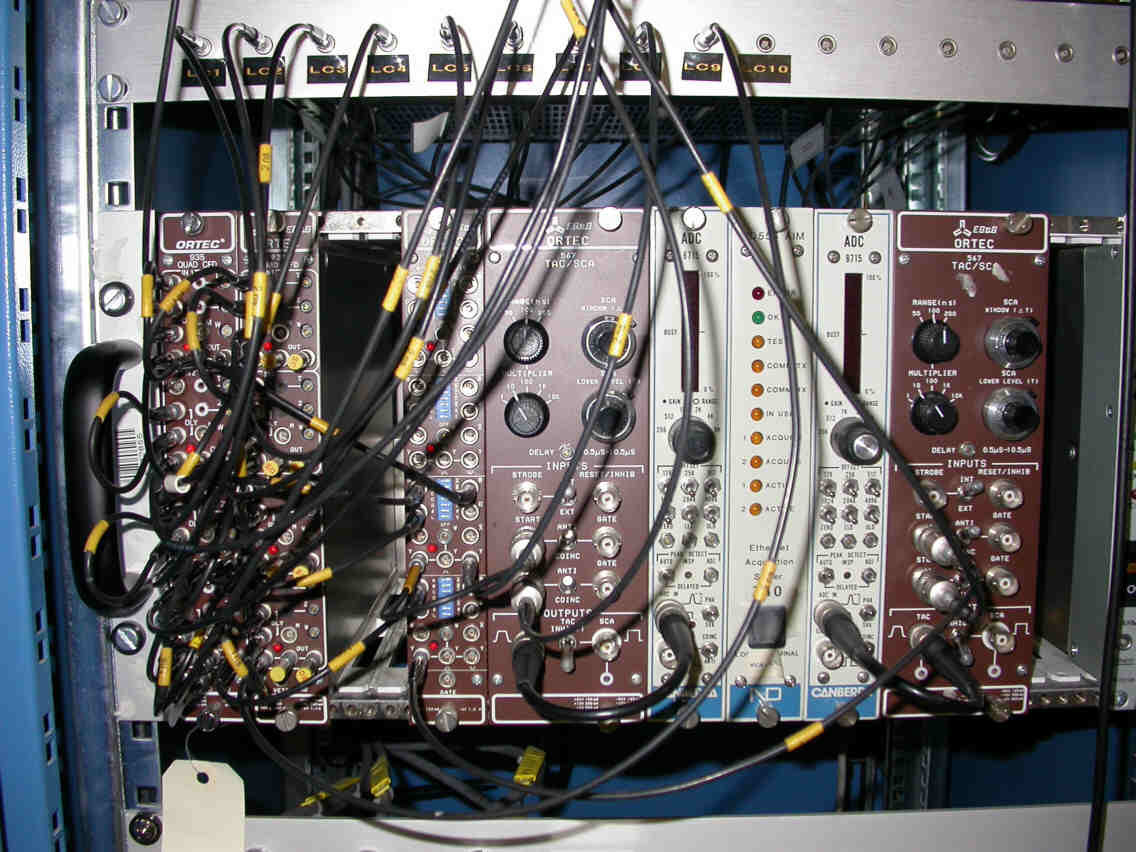
As shown in the figure below, mainly two inputs are necessary for the collection of signals:
- the signal from the detector (APD) in the experiment
- the bunch-clock, which is a trigger signal delivered by the radio frequency signal (352.2 MHz) from the storage ring

The amplified detector signal is fed into a constant fraction discriminators (CFD) to select a timing point on each input pulse that is independent of the pulse amplitude. In reality at high prompt count rates the timing point is unfortunately not independent of the pulse amplitude, which can introduce an uncertainty of about 0.1ns in the determination of time zero. The outgoing signal can serve as monitor for the incident radiation (prompt signal) as long as the detector is not saturated.
The signal from the first CFD is fed to a second CFD. The second CFD is gated. The gate pulse is generated from the bunch clock signal. In this way the signal is separated in prompt and delayed counts. The delayed signal from the CFD is used to record the energy dependence (time integrated) of the Nuclear Resonance Scattering (time distribution - histograming). This gating procedure is necessary because the time histograming procedure can not handle the high count rates of the prompt pulse.
partners


European Synchrotron Radiation Facility - 71, avenue des Martyrs, CS 40220, 38043 Grenoble Cedex 9, France.