- Home
- Users & Science
- Find a beamline
- ID31 - High-energy beamline for buried interface structure and materials processing
- Sample Environment Developments
Sample Environment Developments
Electrochemical Sample Environments
For electrochemical experiments, a set of different cells and associated supporting equipment have been developed.
Liquid distribution systems complementing the cells are available for in-house research and users. For the hanging meniscus setup a platform of motorized pumps, syringes and valves enables precise, remote-controlled liquid exchange in the cell, with the capability of rapid switching between two different electrolytes. The flow cells are typically operated with peristaltic pumps. ID31 is also equipped with multiple potentiostats and liquid reservoirs with argon bubbling. Users can provide their own electrochemical cell, or they can opt to use one of the cells designed for the ID31 in-house research.
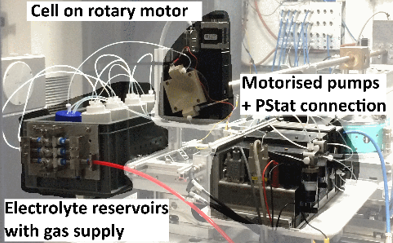
Figure 1. Example of a typical setup for electrochemical experiments.
The different electrochemical cells available in ID31 are:
Micro-fluidic cell for transmission surface diffraction
For XRD experiments in transmission geometry, a micro-fluidic electrochemical cell has been designed (Figure 2). This cell provides controlled hydrodynamics and can be used for experiments on single crystals or samples mounted on electro-deposited on rigid supports (e.g. Si, glass). The electrolyte flow channel is made from an FFKM foil and typically has a rectangular shape of 4×2×0.25 mm (Re = 8), which enables laminar flow over the sample. The channel is designed as a replaceable part, allowing the installation of custom-shaped channels for more complex flow fields.
In transmission geometry, the cell allows large incidence and diffraction angles up to 35° and limits the diffuse scattering to 0.2 mm PEEK and 0.25 mm electrolyte (see Figure 2). The low background allows even surface features to be visible in WAXS. Combined with the micrometre-sized beam available at ID31, the cell therefore allows spatially resolved, surface-sensitive XRD of heterogeneous interfaces. Such information is difficult to obtain with other analytical techniques, making this combination a unique tool e.g. for studies of electrodeposition-based fabrication, manipulation and degradation of electronic systems.
The single crystal sample can be replaced by a 0.5 mm glass slide coated with a conductive, transparent oxide (ITO), which allows the installation of very small samples such as single flakes of 2D materials. In this configuration, a microscope camera can be used to inspect the sample and align the beam.
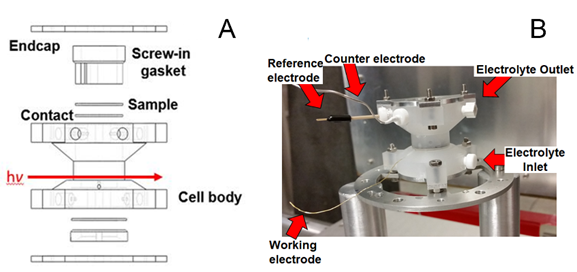
Figure 2. Grazing incidence liquid cell : A) Schematic design; B) Picture of the cell in use in ID31.
Hanging Meniscus cell
For grazing incidence diffraction (GID) measurements on single crystal surfaces, an improved variant of a hanging meniscus cell is available. This configuration supports electrochemistry to be conducted on a droplet of electrolyte in contact with a crystal. The latest iteration of the inhouse design provides excellent droplet stability, and dynamic exchange of the liquid inside the droplet. This reduces the buildup of X-ray induced reaction products, which enables studies of delicate surfaces with higher photon flux than previously feasible.
GID liquid cell
For in-situ characterization of more complex electrochemical systems (i.e. catalytic nanoparticles) we use a GID cell (Figure 3). Analysis of functional electrocatalytic surfaces is routinely hindered by the very low loading of typical catalyst films (<50 mg /cm2). In this design, the measurement is made in the plane of the thin film sample, rather than the traditional through-plane configuration. This arrangement improves the signal to noise approximately 2000-fold, but has not been previously implemented, because it requires a high energy (<50 keV) and tightly focused beam (<10 mm) with low divergence, parameters not available at most diffraction beamlines. This cell enables millisecond-scale electrochemical measurements on nanoparticles in conjunction with high speed diffraction suitable for studying transient processes such as phase transitions and film growth. The easily cleanable and modular design imposes no compromises on the quality of the electrochemistry, even for samples very sensitive to environmental purity.
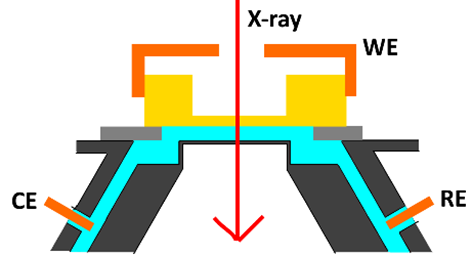
Figure 3. Scheme of the micro-fluidic cell for XRD in transmission geometry
Fuel cell
A sample environment has been designed for operando WAXS and SAXS on proton exchange membrane hydrogen fuel cell devices (Figure 4) in collaboration with Baltic Fuel Cells (Schwerin, Germany). The cell operates together with a commercial testing station (PCS-4M-100W by LeanCat Fuel Cell Technologies) to precisely control cell current, gas flow, gas composition, mechanical compression, temperature, humidity, etc. This sample environment precisely reproduces the conditions inside a real fuel cell, while remaining X-ray transparent due to the PEEK construction. Several safety systems and standard operating procedures have been developed to allow for secure, unattended operation of the test station by users.
Importantly, this cell can operate at the high current densities relevant for automotive applications (up to 4 A/cm2). When combined with a large detector, excellent spatial and time-resolved powder diffraction can be achieved, with quality almost on par with ex-situ capillaries.
Device level testing at ID31 is strictly limited by available beamtime. Evaluating the lifecycle of fuel cells and batteries can require a week of continuous cycling, with data collected perhaps every 10 hours. To improve the utilization of the beamline between these time points, we have piloted several experiments where users operate both the test station and one of the other cell geometries simultaneously, both mounted onto ID31’s large goniometer. By combining fast measurements in the liquid GID cell, with slower, more infrequent measurements in the fuel cell environment, the scientific output of a single experimental run is greatly enhanced.
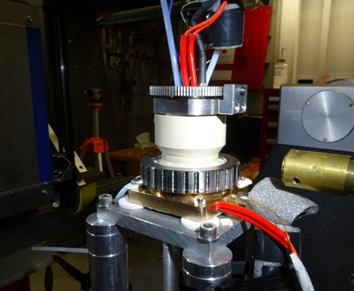
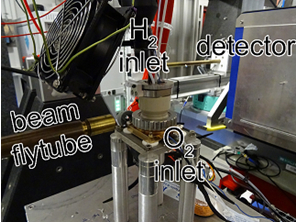
Figure 4. Sample environment for the hydrogen fuel cell configured at ID31.
Electrolizer cells
The ID31 beamline provides two types of electrolyzer cells: a “zero-gap” cell, which allows for high current electrolysis experiments on a simple membrane electrode assembly (MEA) (Figure 5), and a “gapped” cell, which adds the option of flowing an anolyte (Figure 6). In both cases, the external housing is made of PEEK, while the flow plate material is either graphite or titanium, depending on the experimental requirements. The system has been successfully tested under various electrolysis conditions (water electrolysis, CO2/CO electrolysis) and is suitable for operando WAXS and SAXS experiments. Additionally, it can be used in computed tomography mode, and, when experimental conditions allow, it can also be coupled with an XRF detector. Both cells use standard microfluidic connections, making them adaptable to a wide range of experiments.
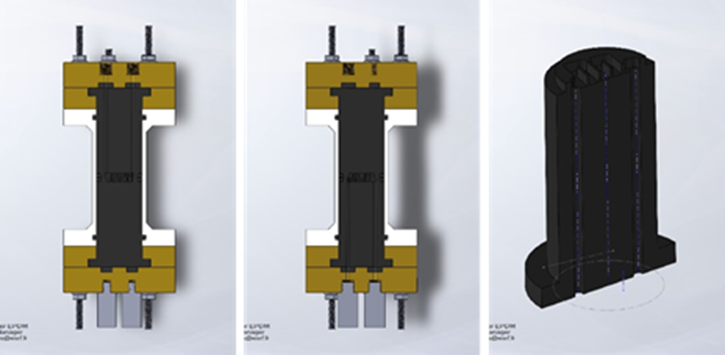
Figure 5. From left to right: schematic design of cross sections of the "zero-gap" electrolyzer cell and a close-up on the "flow-plate" used to flow fluids and ensure the electronic percolation up to the electrochemical core.
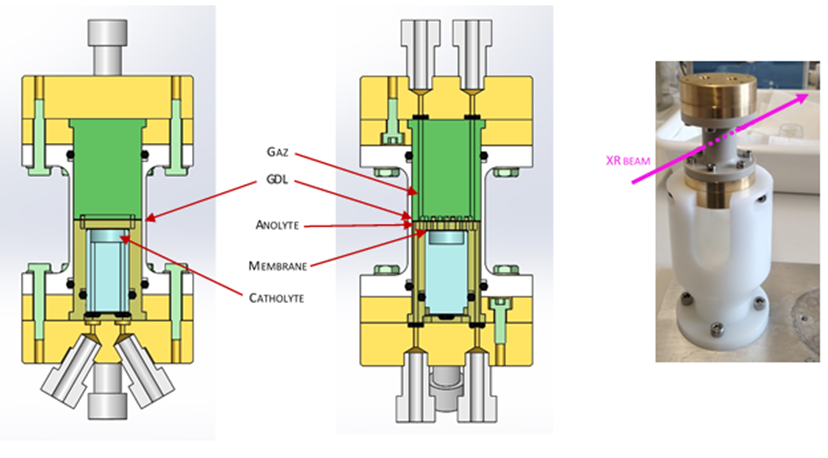
Figure 6. From left to right: schematic design of cross sections of the complete electrolyzer cell, with compartment parts and a picture of the fully assembled cell.
"Swagelok-like" cells
Swagelok® cells are commonly used for low TRL and lab-scale electrochemical applications (such as half-cells, batteries, and super-capacitors). Unfortunately, standard Swagelok® components are not suitable for X-ray measurements, as they either absorb or scatter too much, or are highly photochemically sensitive (e.g., PFA).
To address this, a “Swagelok-like” body has been machined from PEEK material, with walls as thin as possible (0.5 mm). Their simplicity makes them extremely durable and their rather standard configuration make them very popular among both external and in-house users.
Recently, a three-electrode version of this cell was designed and machined for ID31, along with glassy carbon-based connection rods to replace the standard stainless-steel components (see Figure 7). This allows a wider range of electrolytes to be used without the risk of corrosion.
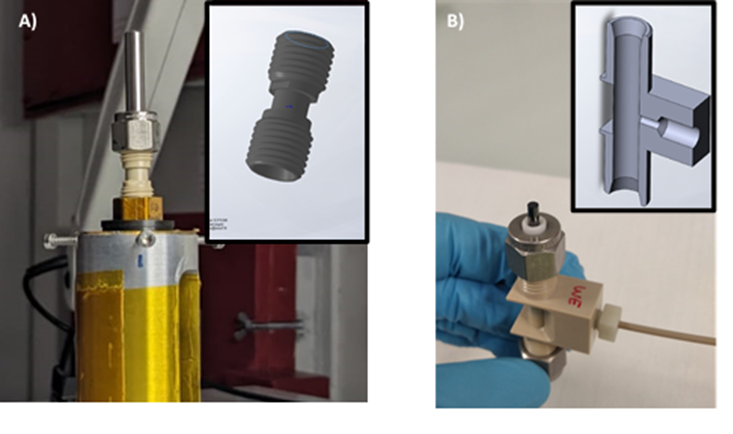
Figure 7. A) "Swagelok-like" cell in two electrodes version with stainless-steel connectors for batteries research experiments. B) "Swagelok-like" cell in three electrodes version with glassy-carbon connectors and reference electrode for acidic electrolysis experiments.
High-throughput powder diffraction instrument
In the frame of the STREAMLINE project and in collaboration with an industrial partner (BASF, Germany), the ESRF Sample Environment Group and the Business Development Office, a robotic sample-changing system has been developed for high-throughput XRPD measurements (Figure 8), which make possible to measure several thousands samples a day.
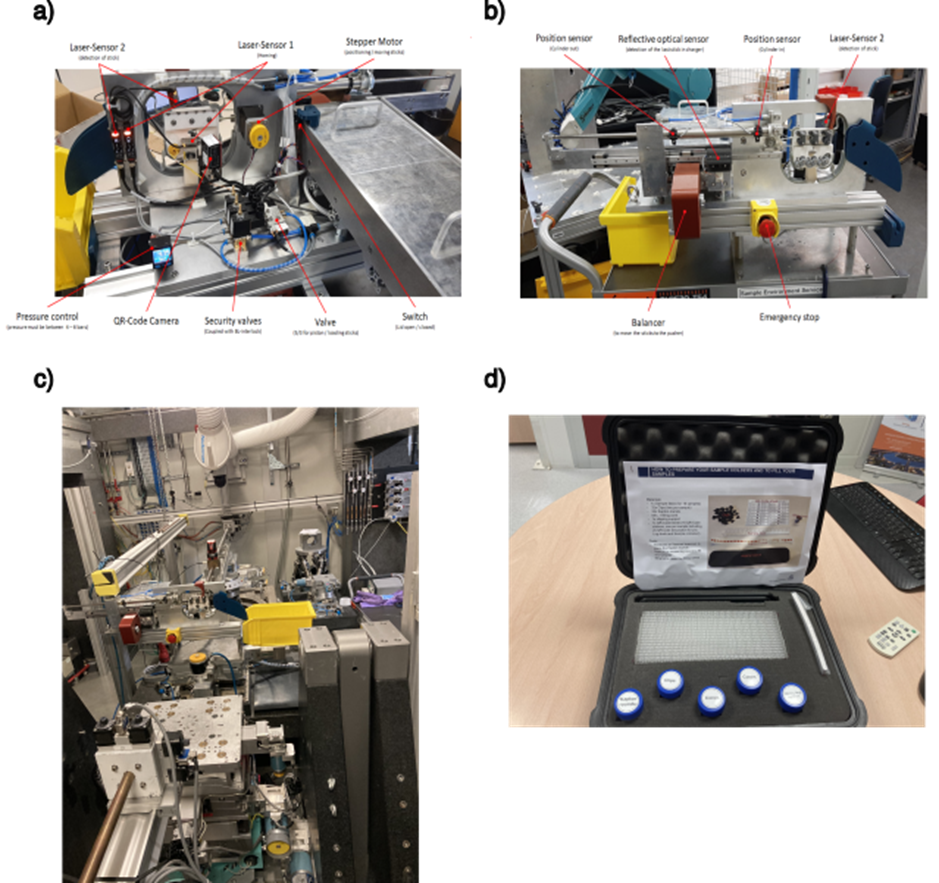
Figure 8. High-throughput Powder Diffraction instrument: a) back view, b) front view, c) instrument installed in the ID31 experimental hutch, d) powder samples preparation kit
The setup consists of an automated sample holder changer specifically designed for the MicroStation granite table, and custom-designed sample holders. The holder compartment accommodates up to 66 sample holders, automatically fed into the beam. Each holder carries 16 samples, allowing 1056 samples to be measured before intervention is needed to exchange the holders. During measurement, the sample holder translates within the beam, and shaking ensures speckle-free diffraction patterns. Initially, very short acquisitions (0.1 s) determine the optimal acquisition conditions for each sample, finding ideal attenuator values and acquisition times. This step is crucial due to variations in material and morphology among samples. Each sample has a QR code, automatically read during acquisition for tracking. Data undergoes automatic radial integration and is placed in the data portal for user access. Users prepare samples in their laboratories and mail the prepared holders. We provide sample preparation cases containing all necessary components, which we send to users and refill periodically upon request.
This setup is being currently mainly used by Momentum Transfer and Business Development Office for industrial measurements, but we also use it for in-house projects with ID31 close collaborators.
Liquid Organic Hydrogen Carriers (LOHC) Reactor
Liquid organic hydrogen carriers (LOHC) represent a promising alternative to hydrogen storage. In order to study (de)-hydrogenation reactions in industrial conditions, the reactor needs to operate at high T,P conditions (> 260◦C, 1-5 bar) and have a representative size of the catalytic bed. It needs to be operated like a mini-plant, with continuous LOHC flow and a constant conversion of around 80%.
The set up (Figure 9) consists of an educt vessel connected to a peristaltic pump that feeds the storage medium into the reactor bed. The storage medium gets pre-heated before entering the reactor bed, which is also heated electrically. The catalytic bed has a volume of around 2000 ml, in a tube of 700 mm. After the catalytic bed, the products go through a cooling system and into the product vessel. After the product vessel, a back pressure regulator is used to set the whole system at the desired pressure, and a flow meter measures the amount of generated H2. The set up allows for the collection of liquid samples of products right after the catalytic bed. It also permits the flow of gases through the system, which is used to pre-pressurize it, pre-reduce the catalyst and create an inert atmosphere before the reaction. The sample collection during the reaction allows us to analyze the composition of the liquid and correlate as well the formation of by-products and intermediates.
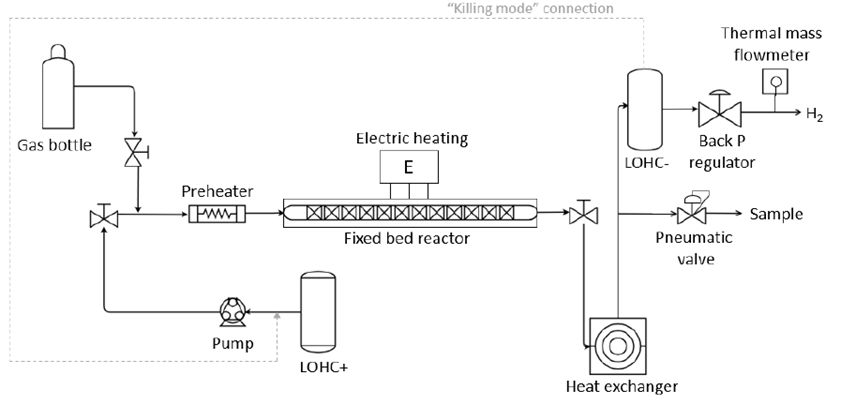
Figure 9. Scheme of the LOHC reactor used for studies at industrial conditions.
One of the key innovations of our reactor is the simultaneous use of both model and commercial catalysts (Figure 10). This allows us to study the model catalyst while the commercial catalyst carries out the reaction, mimicking real-world reactor conditions. The reactor features a packed bed of catalyst pellets, with a model sample placed within the bed for X-ray analysis. A stainless steel mesh protects the model catalyst sample from damage by the pellets while permitting the flow of reagents and previously formed products to reach its surface
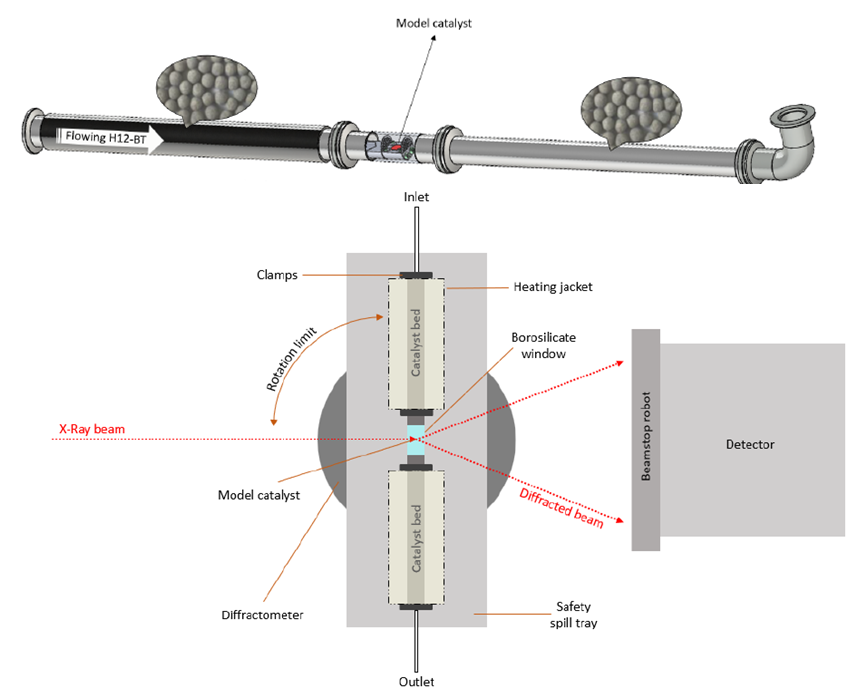
Figure 10. LOHC reactor design. Top: the model catalyst sample is inserted in the bed of commercial catalyst beads. Bottom: the geometry allows the measurement of large angles needed for surface sensitive studies.
partners


European Synchrotron Radiation Facility - 71, avenue des Martyrs, CS 40220, 38043 Grenoble Cedex 9, France.